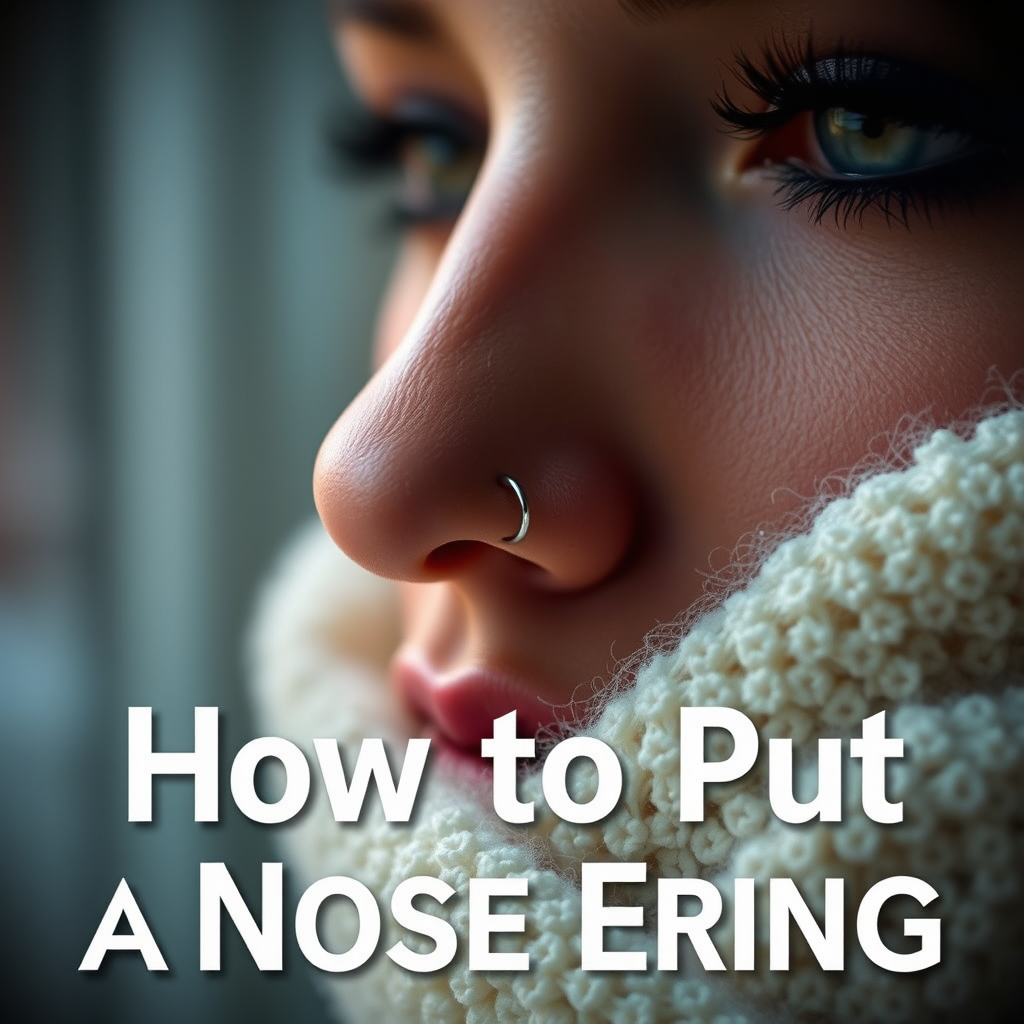
Putting in a nose ring is a straightforward process that can be done safely at home with the right tools and techniques. This guide will walk you through the essential steps to prepare for the piercing, select the appropriate jewelry, and ensure that your nose ring fits comfortably and securely.
Preparing for the Nose Ring Insertion

Before attempting to insert a nose ring, it is crucial to prepare both your workspace and your body. Begin by cleaning the area around your nostril with a saline solution or alcohol wipe to minimize the risk of infection. This step is vital as it removes any bacteria that could lead to complications post-insertion.
Next, gather all the necessary tools to facilitate the process. You will need your chosen nose ring (ensure it’s specifically designed for nose piercings), a mirror for visibility, and possibly a pair of tweezers to help with insertion if you have a stud or hoop that requires extra finesse. Make sure you are in a well-lit area where you can comfortably see what you are doing. Taking your time during this preparation phase will ensure a smoother and more hygienic insertion.
Choosing the Right Nose Ring

Selecting the right nose ring is essential for both comfort and style. There are various styles available, including studs, hoops, and screws. Studs are typically the most straightforward option, while hoops can add a touch of flair. Screws provide a secure fit, especially for those who may be concerned about losing their jewelry.
In addition to style, it’s important to choose the appropriate gauge based on your piercing size. Most nose piercings are done with a gauge of 20 to 18, but this can vary. If you are unsure, it’s a good idea to consult with your piercer or a professional before making a purchase. Remember, the right jewelry not only enhances your appearance but also plays a crucial role in ensuring a comfortable fit.
Inserting the Nose Ring
Once you have prepared the area and selected your jewelry, it’s time for the actual insertion process. Start by using a mirror to locate your piercing hole accurately. This step is essential, especially if it’s your first time inserting a nose ring, to ensure you are aligning the jewelry correctly.
Gently insert the nose ring or stud into the piercing. If you are using a hoop, follow the natural curve of your nostril to avoid any discomfort. For studs, you may want to use tweezers to hold the back of the stud in place while you push the front through. Be patient and avoid forcing the jewelry; if you encounter resistance, take a moment to reassess your angle and approach.
Ensuring a Secure Fit
After inserting the nose ring, it’s crucial to ensure it fits securely without causing discomfort. Adjust the jewelry to sit comfortably against your nostril, ensuring it does not pinch or move excessively. A well-fitted nose ring should feel snug but not tight.
As you adjust the ring, be sure to check for any signs of irritation or discomfort. If you notice any redness or swelling, it may indicate that the jewelry is too tight or that there is an underlying irritation. Don’t hesitate to make minor adjustments until you feel comfortable. Remember, this is an accessory that you will wear regularly, so it’s essential that it feels right.
Aftercare Tips
Proper aftercare is vital for maintaining the health of your piercing and ensuring a smooth healing process. Clean the area around the piercing regularly—ideally, twice a day—with a saline solution or an antiseptic recommended by your piercer. This practice will help prevent infection and promote healing.Avoid touching or twisting the nose ring unnecessarily during the first few weeks after insertion, as this can introduce bacteria and lead to complications. If you need to clean the area, ensure your hands are clean and dry. Additionally, be cautious when applying makeup or skincare products near the piercing.
Troubleshooting Common Issues
Even with the best preparation and care, you may encounter some common issues after inserting your nose ring. Swelling or irritation is relatively frequent, especially within the first few days. If you experience swelling, apply a warm compress to the area. This can help reduce inflammation and promote healing.
However, if you notice persistent pain, excessive redness, or discharge, it may be time to seek professional help. It’s essential to listen to your body; if something feels off, do not hesitate to consult with a piercer or healthcare professional for advice. They can provide insights and, if necessary, recommend alternative solutions.
Maintaining your nose piercing requires diligence and care, but with the right approach, you can enjoy your new look without complications.
In summary, inserting a nose ring can be a simple and enjoyable experience when done correctly. By preparing adequately, choosing the right jewelry, and following proper aftercare procedures, you can ensure a comfortable and stylish addition to your appearance. Remember to listen to your body and seek professional guidance if any issues arise. Embrace the transformation and enjoy the confidence that comes with your new nose ring!
Frequently Asked Questions
What is the best type of nose ring for beginners?
For beginners, a simple stud or hoop nose ring made from materials like titanium or surgical stainless steel is recommended. These materials are hypoallergenic and reduce the risk of irritation or infection. A small, lightweight design is easier to manage and less likely to get caught on clothing or during activities, making it ideal for those new to wearing nose jewelry.
How do I prepare for getting a nose ring?
To prepare for getting a nose ring, start by researching reputable piercers and understanding the types of nose piercings available. Ensure you go on a day when you can rest afterward, as the piercing process can be uncomfortable. It’s also important to eat a light meal and stay hydrated before your appointment to help manage any potential dizziness from the procedure.
Why does my nose ring hurt after putting it in?
Pain after putting in a nose ring can occur due to several factors, including irritation from the jewelry material, improper placement, or infection. If the pain lasts more than a few days or is accompanied by swelling or discharge, it’s essential to consult with a professional piercer or a healthcare provider to determine the cause and appropriate treatment.
Which aftercare steps should I follow for my new nose ring?
Aftercare for your new nose ring is crucial to ensure proper healing and prevent infection. Clean the area twice daily with a saline solution or a gentle saline spray, and avoid touching the piercing with dirty hands. Additionally, refrain from changing or removing the jewelry until the piercing has fully healed, which can take anywhere from 6 weeks to several months, depending on individual healing rates.
What should I do if my nose ring gets stuck or can’t be removed?
If your nose ring gets stuck or you’re unable to remove it, avoid the temptation to force it off, as this could cause injury. Instead, try to gently twist the ring or stud to see if it loosens. If it still won’t budge, consider visiting a professional piercer for assistance, as they have the tools and expertise to safely remove your jewelry without damaging the piercing.
References
- Nose ring
- https://www.ncbi.nlm.nih.gov/pmc/articles/PMC6603665/
- https://www.healthline.com/health/nose-piercing-care
- https://www.mayoclinic.org/healthy-lifestyle/adult-health/expert-answers/nose-piercing/faq-20057843
- https://www.webmd.com/beauty/what-to-know-about-nose-piercings
- https://www.aafp.org/pubs/afp/issues/2013/0701/p59.html